Colon surgery with da Vinci
If you have colon cancer or a benign (not cancer) condition in your large intestine, da Vinci may be your answer.Colon surgery, also called colectomy, is surgery to remove part or all of your large intestine (colon or bowels). Your doctor may recommend it when part of your colon is diseased, damaged, or not working the way it should. Common reasons include cancer, blockages, diverticulitis, and inflammatory bowel diseases (IBD) like Crohn's disease or ulcerative colitis.
Step 1During a colectomy, your surgeon removes the diseased section of the colon, sometimes including nearby lymph nodes. A hemicolectomy removes one side (left or right) of your colon. A sigmoid colectomy removes part or all of the sigmoid colon that connects to the rectum.
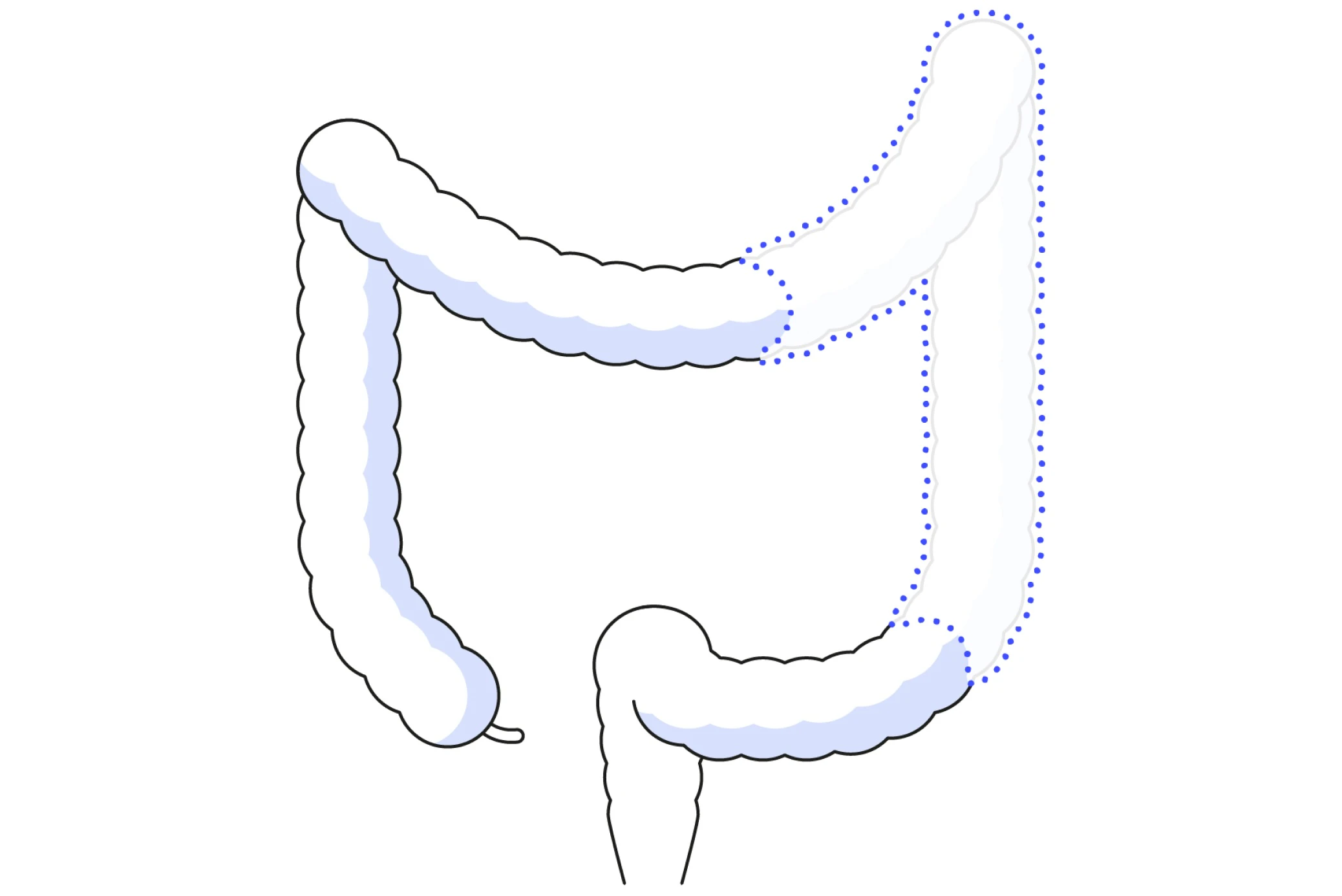
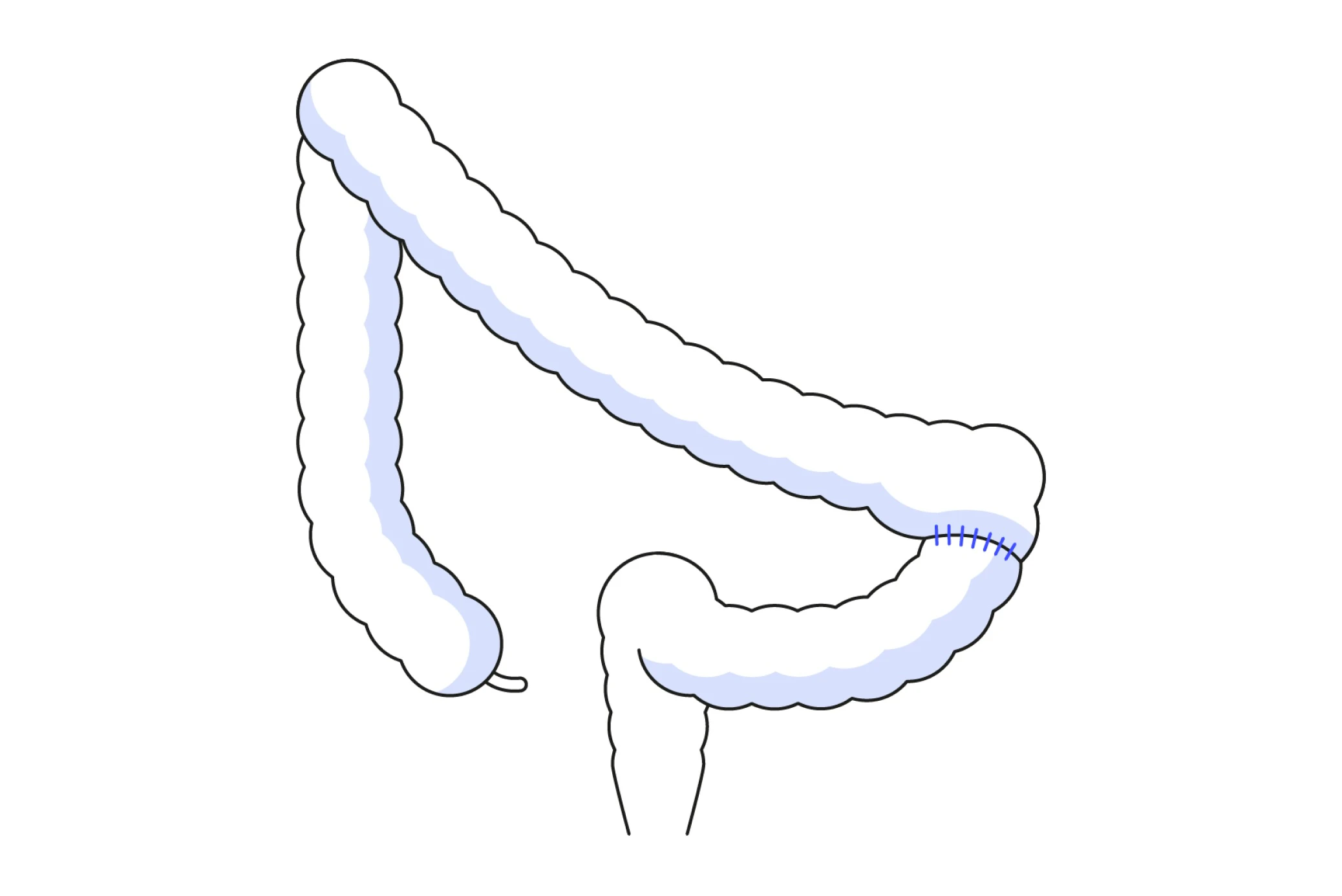
Step 2After removing part of the colon, your surgeon must reconnect the healthy ends. Da Vinci's flexible instruments and vision technology help surgeons work inside the body while reconnecting the healthy colon sections. This is different than bringing the two ends outside the body to reconnect them. Internal reconnections may result in shorter hospital stays and fewer complications.1,2
Not every patient's surgery follows the same path. Your care team will walk you through what to expect for your specific procedure.
Open vs. minimally invasive colectomy
Doctors can perform colon surgery through traditional open surgery or a minimally invasive approach.
Traditional (open) surgery incisionOpen surgery requires a single incision in your abdomen, usually 6 to 12 inches long. The opening must be large enough for your surgeon to see the colon and operate using handheld instruments. Such a large cut can mean more pain,3 a slower recovery,4 and a higher risk of infection.5

Minimally invasive incisionBoth laparoscopic surgery and da Vinci surgery are minimally invasive. In laparoscopic surgery, doctors use special long-handled tools while viewing magnified images from a laparoscope (camera) on a video screen. With the da Vinci system, your surgeon sits at a console near you in the operating room. Through the console, your surgeon controls the camera and instruments used to perform your surgery.
Why doctors may prefer colectomy with da Vinci
Many doctors trust da Vinci technology to help them operate in tight pelvic spaces. It can help them work carefully around major blood vessels, nerves, and nearby organs.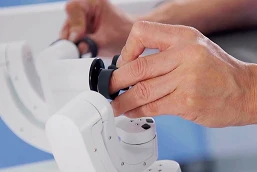
Refined controlDa Vinci gives surgeons tools that can be especially helpful in colon surgery. The miniaturized instruments can bend and turn, which helps surgeons operate in places that are hard to reach. The system also helps reduce surgeons’ normal hand shaking, so the instruments stay steady when working on delicate bowel tissue.

Enhanced visionColon conditions and scar tissue can change the normal shape of your anatomy. This can make it hard for surgeons to see where they need to operate. Da Vinci’s magnified high-definition 3D vision helps surgeons see more details than they can with their eyes alone.
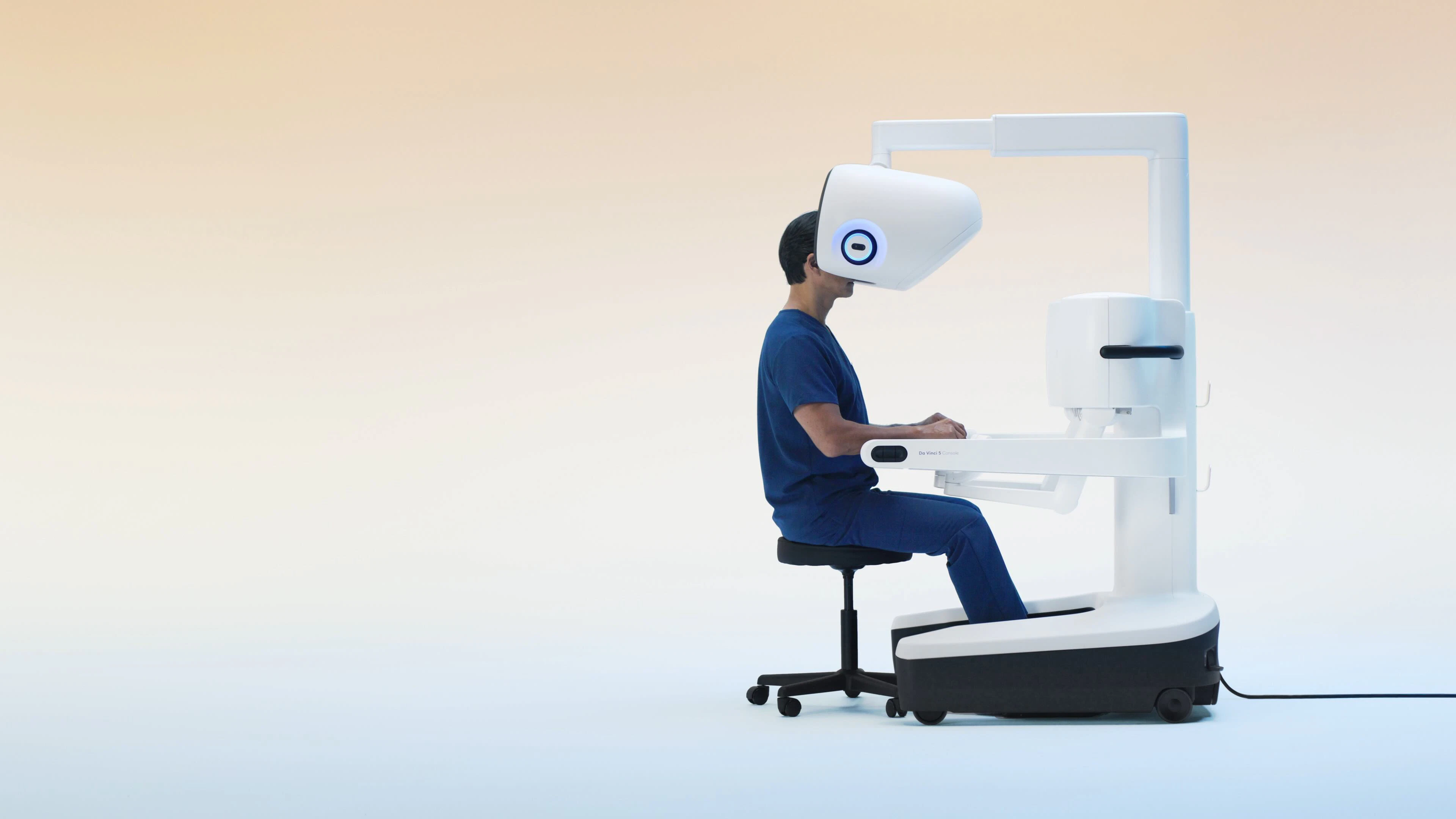
Surgeon comfortDa Vinci systems help surgeons stay at their best. Complex colon surgeries can take several hours. Instead of standing for all that time, surgeons can operate while sitting, which can help your surgeon stay comfortable and focused on your surgery from start to finish.
Da Vinci colon surgeries: What the research shows
Doctors can perform colon surgery in different ways, including traditional open surgery, laparoscopic surgery, and da Vinci surgery. Studies show that surgery with da Vinci may offer important benefits for some patients.Results seen in studiesSurgery studies look at different patients and measure different results. That's why results for da Vinci surgery vary across study groups.The results shown in this chart are from a review of Intuitive data from 300 hospitals for colon surgeries that took place from January 2021 to November 9, 2023. The number of patients in this data was 16,116 da Vinci surgery patients, 13,489 laparoscopic patients, and 25,998 open surgery patients.6
Metric | Da Vinci | Laparoscopic | Open |
|---|---|---|---|
Average length of hospital stay (days) | 4.2 days | 5.9 days | 8.9 days |
Intensive care admissions (%) | 2.2% | 4.6% | 14.9% |
Surgical site infection rate (%) | 0.6% | 1.0% | 2.1% |
Hospital readmissions within 30 days | 6.4% | 7.2% | 10.1% |
Conversions to open surgery | 5.3% | 20.5% | ----- |
If you and your doctor decide surgery is right for you, ask whether da Vinci robotic-assisted surgery could be the answer.Learn more about da Vinci robotic-assisted surgery and what to expect.
Find a surgeon
Search for surgeons and hospitals near you who perform da Vinci robotic-assisted surgery.